
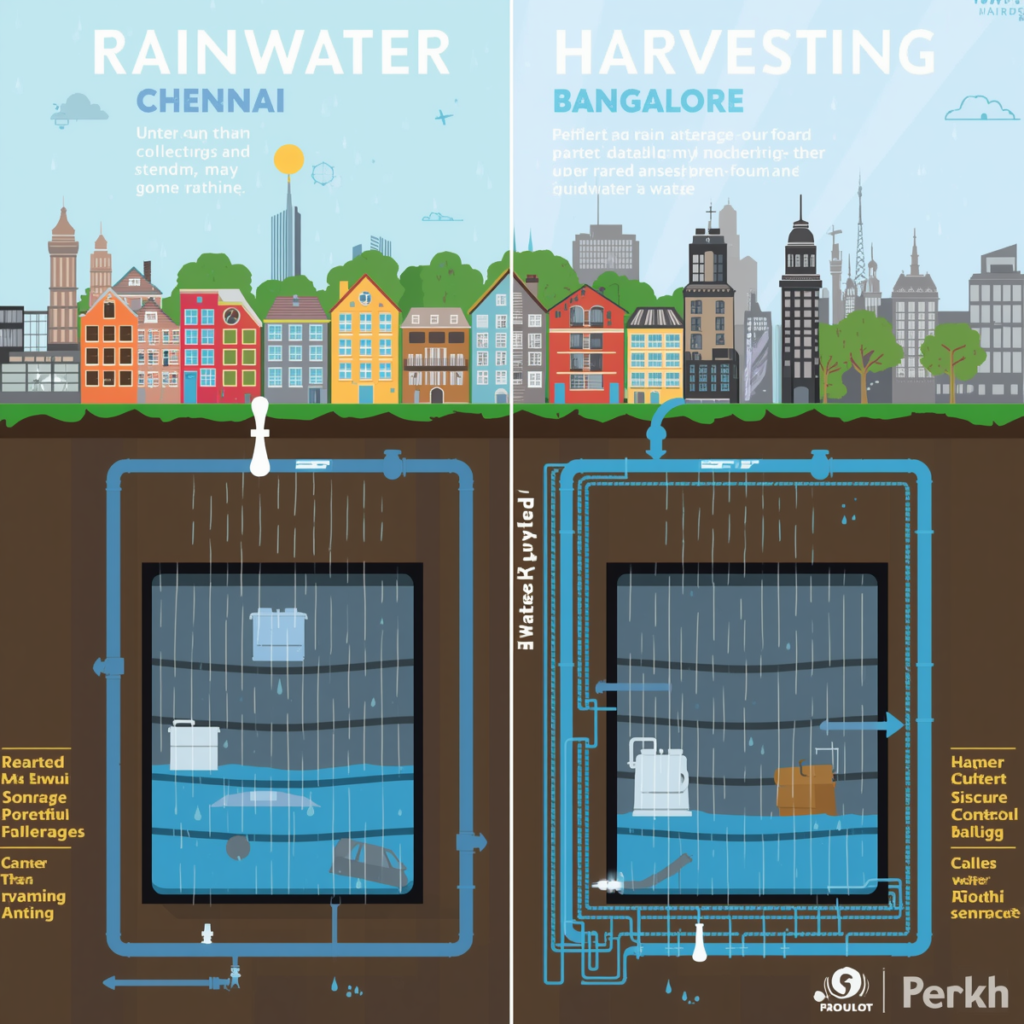
Rainwater Harvesting Rules in Chennai & Bangalore (2026): Approval, Cost & Penalties Explained
Water scarcity has become a serious issue across major Indian cities, especially Chennai and Bangalore. Rapid urbanization, groundwater depletion, disappearing lakes, increasing apartment construction, and irregular monsoon patterns have pushed both cities into recurring water crises.
Because of this, rainwater harvesting is no longer considered an optional environmental practice. In many areas, it has become an essential part of building approval, groundwater recharge, and long-term water security planning.
Many property owners still misunderstand rainwater harvesting systems. Some believe it is only useful during heavy monsoon seasons, while others install poor-quality systems only to satisfy approval requirements. In reality, properly designed rainwater harvesting systems can significantly improve groundwater recharge, reduce flooding, lower water dependency, and improve borewell sustainability.
This guide explains:
- rainwater harvesting rules in Chennai and Bangalore
- approval requirements
- common system types
- installation cost factors
- common mistakes
- penalties and compliance issues
- groundwater recharge importance
- long-term benefits
Why Rainwater Harvesting Is Important in 2026
Both Chennai and Bangalore face increasing pressure on groundwater resources.
Major reasons include:
- rapid urban construction
- excessive groundwater extraction
- shrinking water bodies
- concrete surface expansion
- declining natural recharge
- population growth
Many regions now depend heavily on:
- tanker water
- deep borewells
- imported water supply
Without proper recharge systems, groundwater levels continue declining every year.
Rainwater harvesting helps capture seasonal rainfall and return water back into the ground instead of allowing it to flow away through drainage systems.
What Is Rainwater Harvesting?
Rainwater harvesting is the process of collecting, filtering, storing, or recharging rainwater for future use or groundwater replenishment.
Instead of wasting rainwater through runoff, the water is directed into:
- recharge pits
- storage tanks
- percolation systems
- recharge wells
- filtration chambers
The system design depends on:
- land size
- roof area
- rainfall level
- soil condition
- groundwater depth
- building type
Why Chennai Made Rainwater Harvesting Mandatory
Chennai has experienced severe water shortages multiple times over the past decades.
Major reasons include:
- overdependence on groundwater
- declining lake storage
- urban flooding
- poor recharge
- uncontrolled urbanization
Due to repeated water crises, authorities introduced mandatory rainwater harvesting requirements for many buildings.
The objective was:
- improve groundwater recharge
- reduce flooding
- restore groundwater levels
- encourage sustainable water management
After implementation, many areas observed noticeable groundwater improvement over time.
Rainwater Harvesting Rules in Chennai (2026)
In Chennai, rainwater harvesting systems are widely expected as part of responsible building infrastructure.
Rainwater harvesting may be considered important for:
- residential buildings
- apartments
- commercial complexes
- institutional buildings
- industrial properties
Authorities increasingly encourage proper recharge planning during:
- construction approval
- property development
- infrastructure planning
Many property owners install systems to improve:
- groundwater recharge
- borewell recovery
- long-term water sustainability
Poorly maintained or non-functional systems may reduce effectiveness significantly.
Rainwater Harvesting Rules in Bangalore (2026)
Bangalore also faces major groundwater stress due to:
- rapid urban expansion
- lake degradation
- excessive borewell dependency
- rising population
Water shortages during summer have become increasingly common in many parts of the city.
Rainwater harvesting systems are considered important for:
- groundwater recharge
- reducing tanker dependency
- improving water sustainability
Many newer buildings and layouts include recharge systems as part of water management planning.
Common Types of Rainwater Harvesting Systems
Different properties require different recharge solutions.
1. Rooftop Rainwater Harvesting
This is one of the most common systems.
Rainwater from rooftops is collected through pipes and directed into:
- storage tanks
OR - recharge systems
This method works well for:
- houses
- apartments
- schools
- offices
2. Recharge Pits
Recharge pits allow rainwater to slowly percolate into the ground.
These are useful for:
- groundwater recharge
- reducing runoff
- supporting nearby borewells
Pit size depends on:
- rainfall
- soil condition
- roof area
3. Percolation Wells
Percolation wells help transfer water into deeper soil layers.
They are commonly used where:
- surface infiltration is poor
- groundwater recharge is required
- open land space is limited
4. Storage Tanks
Some systems store rainwater for:
- gardening
- washing
- non-drinking purposes
This reduces dependency on external water supply.
5. Recharge Trenches
Recharge trenches are shallow channels filled with filtering material that improve groundwater infiltration.
These systems are useful for:
- larger plots
- commercial areas
- layouts
- industrial properties
Main Factors Affecting Rainwater Harvesting Cost
Many people ask:
“What is the exact rainwater harvesting cost?”
There is no single answer because cost depends on several factors.
1. Property Size
Larger properties require:
- larger recharge systems
- longer pipelines
- higher storage capacity
This increases overall cost.
2. Soil Condition
Different soil types absorb water differently.
Clay-heavy soil may require different recharge design compared to sandy soil.
Proper geological understanding improves system effectiveness.
3. Roof Area
Bigger roof areas collect more rainwater.
System design must match expected water collection volume.
4. Recharge Requirement
Some properties prioritize:
- groundwater recharge
Others focus on:
- water storage
Both require different system designs.
5. Material Quality
Low-quality pipes, filters, or chambers may fail quickly and reduce efficiency.
Cheap systems often create maintenance problems later.
Common Rainwater Harvesting Mistakes
Many rainwater harvesting systems fail because of poor planning.
1. Installing Only for Approval
Some people install systems only to satisfy regulations without focusing on actual functionality.
Non-functional systems provide little real benefit.
2. Poor Maintenance
Blocked filters and clogged pipes reduce recharge efficiency.
Regular cleaning is necessary.
3. Wrong Pit Size
Undersized recharge pits may overflow during heavy rainfall.
Proper calculation is important.
4. Ignoring Soil Conditions
Soil permeability affects recharge success.
Ignoring geology leads to poor performance.
5. Poor Drainage Design
Incorrect slope or pipe alignment reduces water flow efficiency.
Connection Between Rainwater Harvesting & Borewells
Many borewell owners ignore recharge planning.
This creates long-term groundwater problems.
Without recharge:
- groundwater declines
- borewell recovery weakens
- summer shortages increase
Rainwater harvesting supports:
- groundwater recharge
- aquifer recovery
- water table improvement
- long-term sustainability
Recharge systems are especially important in hard rock regions where groundwater replenishment is slow.
Groundwater Sustainability Matters More Than Ever
Water demand continues increasing across:
- residential areas
- industries
- agriculture
- commercial buildings
At the same time:
- lakes are shrinking
- open land is reducing
- groundwater extraction is increasing
Without recharge management, future water shortages may become more severe.
Rainwater harvesting is one of the few practical solutions that individual property owners can implement directly.
Benefits of Rainwater Harvesting
Proper systems provide several advantages:
Groundwater Recharge
Improves underground water availability.
Better Borewell Recovery
Recharge supports borewell sustainability.
Reduced Flooding
Helps reduce urban runoff during heavy rainfall.
Lower Tanker Dependency
Stored and recharged water reduces external dependence.
Water Conservation
Supports sustainable resource management.
Environmental Benefits
Reduces pressure on natural water bodies.
Why Scientific Site Assessment Helps
Not all properties require the same rainwater harvesting design.
Professional assessment helps evaluate:
- soil behavior
- groundwater conditions
- recharge potential
- slope pattern
- runoff behavior
Proper planning improves long-term system efficiency.
Future of Water Management in Indian Cities
Cities like Chennai and Bangalore are entering a period where:
- groundwater management
- recharge systems
- sustainable water planning
will become increasingly important.
Future urban planning will likely focus more on:
- recharge infrastructure
- water conservation
- groundwater restoration
- sustainable construction practices
Property owners who invest early in proper recharge systems may benefit significantly in the long run.
Conclusion
Rainwater harvesting has become an essential part of water sustainability in Chennai and Bangalore. Increasing groundwater depletion, rapid urbanization, and recurring water shortages make recharge systems more important than ever.
A properly designed rainwater harvesting system helps:
- improve groundwater recharge
- support borewell recovery
- reduce flooding
- improve long-term water security
Many people make the mistake of installing poor-quality systems only for approval purposes. However, effective rainwater harvesting requires proper planning, suitable design, regular maintenance, and understanding of local geological conditions.
As water scarcity continues increasing, responsible groundwater recharge and sustainable water management will become critical for both residential and commercial properties.
Investing in proper rainwater harvesting today can help reduce future water risks and support long-term environmental sustainability.